CASA California has a recruitment superpower: its volunteers. They’re often the most trusted voices for bringing in new advocates. But asking everyday people to recruit can feel like a lot, especially when the materials in their hands sound formal, scripted, or too “salesy.”
When CASA California approached us to develop a peer-to-peer recruitment kit, the initial expectation was straightforward: create traditional materials like brochures, presentation slides, and talking points.
Once we reviewed the existing resources, we saw a deeper issue. The materials weren’t built for the people actually using them, CASA volunteers talking to their peers. Most volunteers aren’t professional recruiters or public speakers. They’re neighbors, coworkers, parents, and community members who show up because they care about kids.
So the challenge wasn’t just to “make better materials.” It was empowering volunteers to discuss their work in a human, approachable, and authentic way.
Discovering the Real Opportunity
Before we designed anything, we listened.
Through conversations with stakeholders, volunteers, and local program managers, we discovered how recruitment really happens. Not in a presentation, but in everyday moments like a chat with a friend, a conversation at work, a quick exchange after a community event.
We kept coming back to the same truth: CASA volunteers are at their best when they share their personal stories.
The existing materials didn’t make room for that. They leaned on institutional language and polished messaging, the kind that’s hard to say out loud and even harder to make your own.
That insight changed the brief.
Instead of a traditional marketing toolkit, we proposed something different: a peer storytelling toolkit that helps volunteers share their experience using their own voice, while inviting others to join.
Strategy: From Marketing Materials to Storytelling Tools
We kept the strategy simple: help volunteers lead with their stories.
People rarely join a volunteer program because they read a brochure or see a statistic. They join because someone they trust tells them why this work matters and what it feels like to do it.
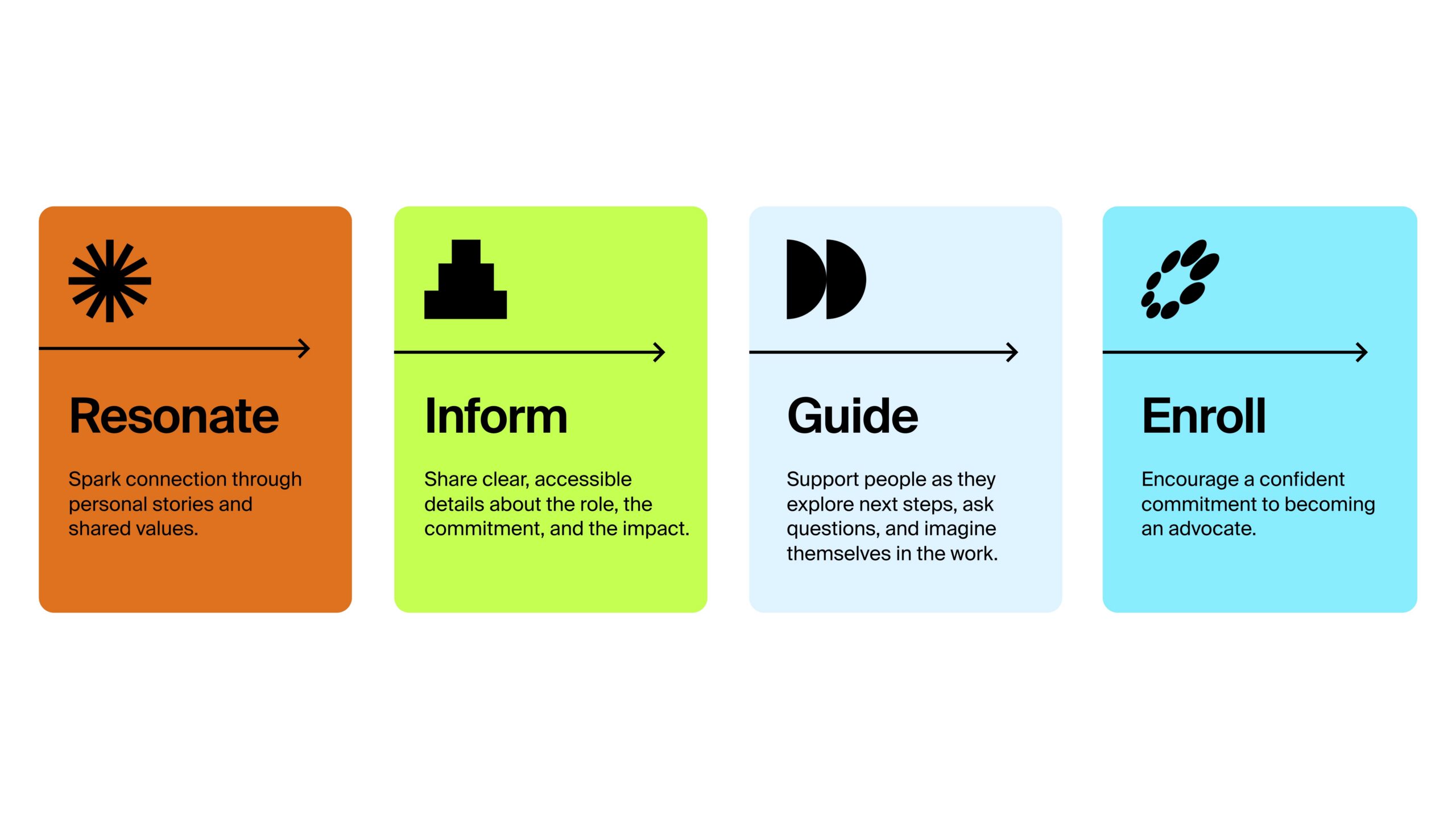
We designed the recruitment approach around the emotional journey of a potential volunteer, from first hearing about CASA to deciding to get involved. That journey unfolds in four stages:
- Resonate: Spark connection through personal stories and shared values.
- Inform: Share clear, accessible details about the role, the commitment, and the impact.
- Guide: Support people as they explore next steps, ask questions, and imagine themselves in the work.
- Enroll: Encourage a confident commitment to becoming an advocate.
At each stage, storytelling and human connection stay at the center.
Understanding Volunteer Motivation
We also dug into what motivates people to become CASA volunteers in the first place.
Across conversations and testimonials, a consistent theme came through: people want to make a meaningful difference in a child’s life.
Advocates said it best in their own words:
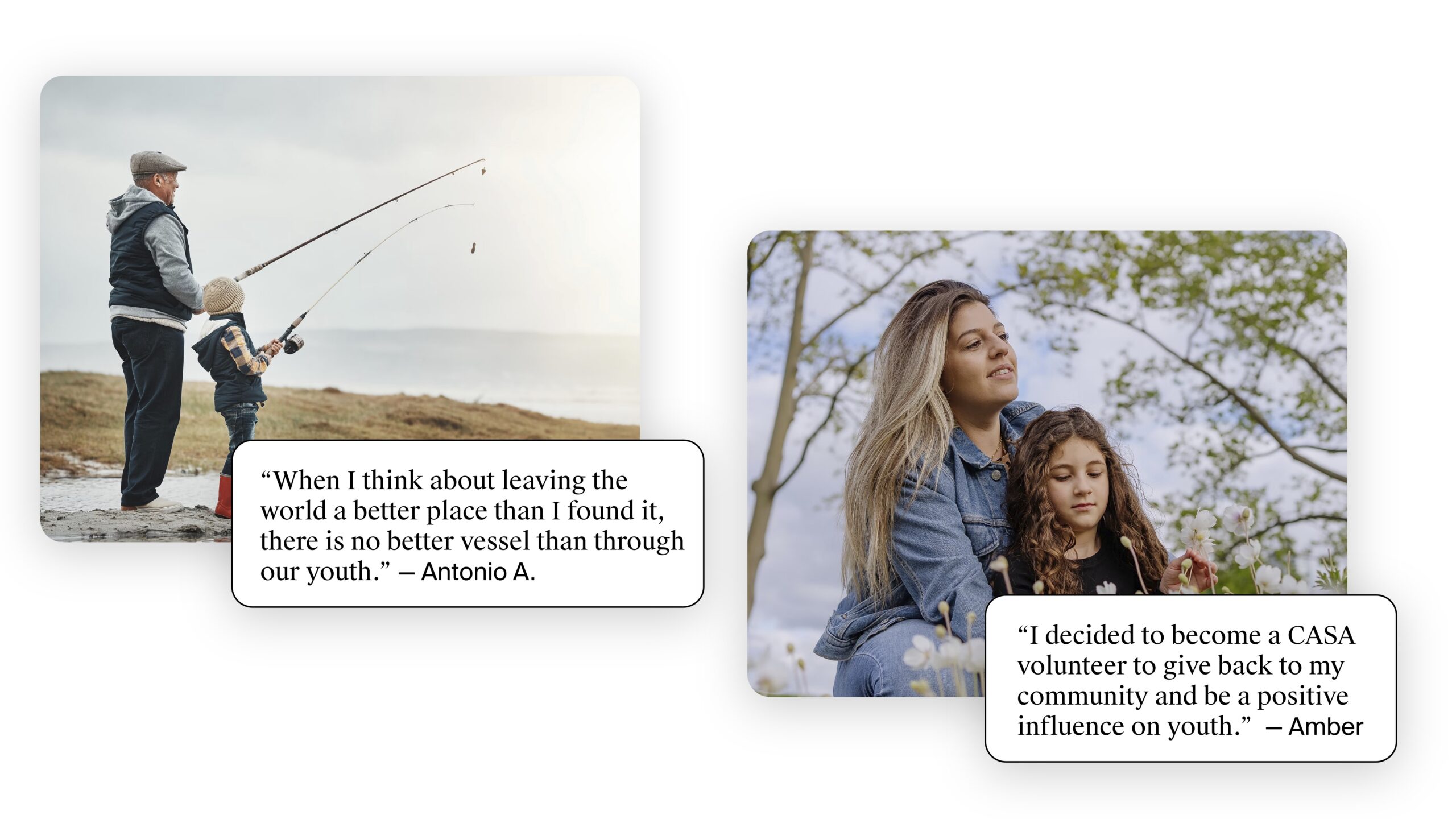
“When I think about leaving the world a better place than I found it, there is no better vessel than through our youth.”
— Antonio A.
“I decided to become a CASA volunteer to give back to my community and be a positive influence on youth.”
— Amber
These reflections point to what’s really driving the decision: empathy, compassion, connection, and purpose.
Designing around those motivations helped the toolkit feel like it belonged to the volunteers using it.
The Solution: CASA-in-a-Kit
The result is CASA-in-a-Kit, a flexible toolkit that helps volunteers share their stories with confidence and bring others into the CASA community.
Instead of prescribing one “right” way to recruit, the kit gives volunteers options they can adapt to their voice, comfort level, and context.
The tools fall into three main areas:
Storytelling Support
Resources that help volunteers tell their stories in ways that feel honest and doable. Examples include testimonial prompts, simple story frameworks, and content templates that help advocates share why they care about CASA and the impact they’ve seen firsthand.
Community Engagement
Tools that help volunteers start conversations and connect with people in their networks—both in person and online. These include social media templates, conversation starters, shareable graphics, and community storytelling opportunities.
Education and Guidance
Clear, approachable resources that help potential volunteers understand the role of an advocate, and what to do next. This includes informational materials, webinars, and simple guides that make the process of becoming a volunteer easier to navigate. Together, these tools support volunteers without overwhelming them, turning recruitment into a natural extension of their advocacy.
Designing for the Emotional Journey
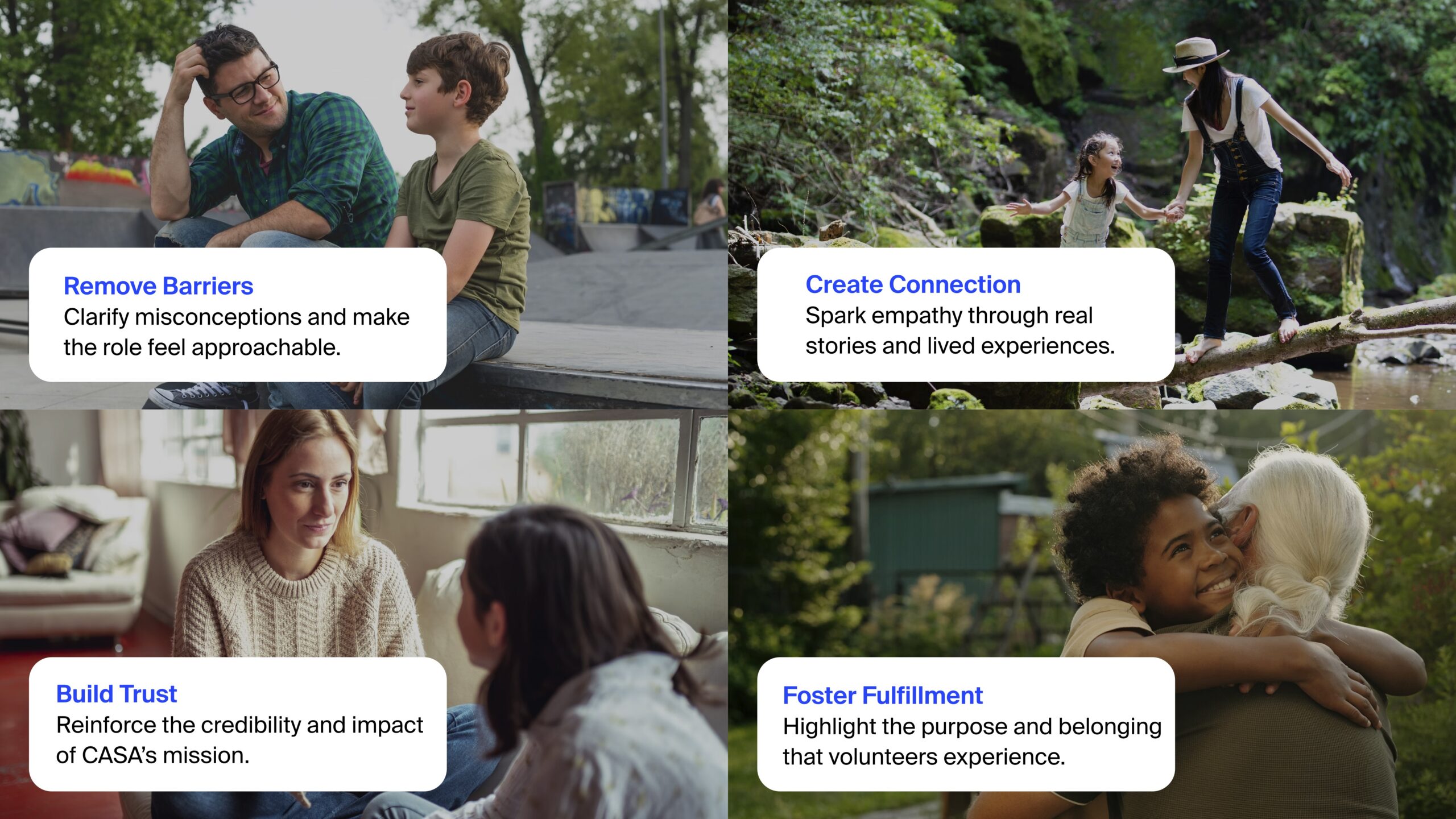
What makes this peer-to-peer toolkit different is its focus on how it feels to become a volunteer. Each stage addresses the questions and hesitations people bring to the process, even if they don’t say them out loud:
Remove barriers: Clarify misconceptions and make the role feel approachable.
Create connection: Spark empathy through real stories and lived experiences.
Build trust: Reinforce the credibility and impact of CASA’s mission.
Foster fulfillment: Highlight the purpose and belonging that volunteers experience.
By meeting both emotional and practical needs, the toolkit helps turn curiosity into commitment.
Reflections and Takeaways
This project reinforced a simple truth: tools work best when they’re designed for the people who actually use them.
A few lessons we’ll carry forward:
Start with listening: Volunteer stories revealed the gap between institutional messaging and real-world conversations.
Emotion drives action: People are more likely to volunteer when they connect with a person, not a pitch.
Make advocacy feel natural: Recruitment gets easier when volunteers can speak in their own words.
Community strengthens confidence: Volunteers feel supported when they know they’re part of a larger network of advocates.
Flexibility invites participation: Multiple ways to engage lets people recruit in ways that fit their comfort level and environment.
That flexibility matters because it lowers the pressure and keeps the focus on connection.
By shifting the focus from traditional marketing materials to human storytelling, CASA-in-a-Kit turns recruitment from a transactional task into a meaningful invitation.
It’s not just about finding more volunteers. It’s about building a community of advocates who feel confident sharing their experiences and are inspired to bring others along.